
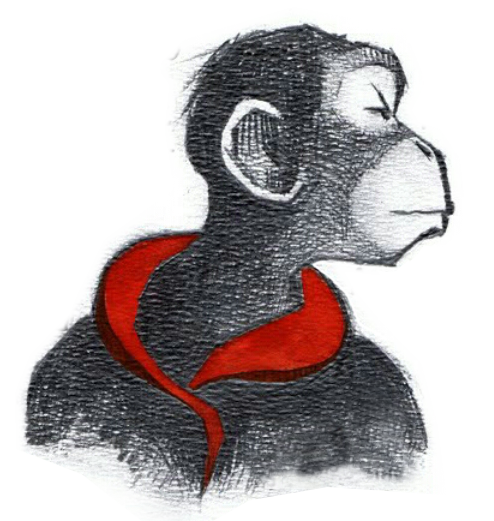


The significance of an action increases when the subject has a stake in its outcome.
The incarnation is one of the most extraordinary and least understood facts of the Christian tradition. For almost two thousand years, Christians have affirmed that God enters history as a man who is born, grows up, and knows hunger, thirst, fatigue, physical pain, anguish and death.
Cultural familiarity with this narrative risks concealing its conceptual scope. Yet the incarnation contains a surprising thesis about the nature of knowledge, responsibility and meaning.
Most religions, philosophies and worldviews tend spontaneously to associate perfection with freedom from limitation. The more exalted a reality appears, the more distant it seems from need, dependence, suffering and vulnerability. Perfection is imagined as a form of self-sufficient completeness. Power consists in the capacity to remain untouched by events. Knowledge consists in a privileged position from which to observe the world without suffering its consequences.
The incarnation introduces a different perspective. Christianity places at the centre of its reflection a God who accepts the human condition in its entirety and remains fully God while living through it. Hunger does not diminish his nature. Weariness does not impoverish it. Pain does not make it any less divine. Vulnerability becomes an integral part of revelation.
Contemporary culture invests enormous energy in reducing vulnerability. Medicine seeks to reduce illness, technology seeks to reduce toil, and finance seeks to reduce uncertainty. A significant part of human progress consists precisely in this process. Vulnerability is understood as a condition to be overcome.
Artificial intelligence perhaps represents the furthest point along this trajectory. For the first time, we have a form of intelligence capable of processing information without being exposed to the fundamental conditions of human existence. It does not know pain, does not age, does not fear death, does not lose loved ones, does not risk financial failure and, above all, is not responsible for its own assertions. Its capacity to analyse, but also to be heard, derives in part from this particular condition of distance.
In recent decades, a broad current of research has developed that has shown the limits of a purely computational conception of the mind. Philosophers, neuroscientists and cognitive psychologists have progressively highlighted the role of the body, emotions and lived history in the formation of thought. Human cognition emerges within an ongoing relationship with the world. Perception, memory, attention and judgement develop through the concrete experience of an organism that exists in flesh, blood, nerves and bones.
Antonio Damasio has shown how individuals perfectly capable of logical reasoning can lose the ability to decide when the systems linking thought to the emotional consequences of action are impaired. The alternatives remain comprehensible. Advantages and disadvantages continue to be analysed, but what dissolves is the existential weight of choice. They cannot choose because thought is no longer bound to consequences for the body.
Decision requires something that mere calculation does not contain. A genuine decision is an irreversible commitment under conditions of uncertainty, where something can be lost.
Every meaningful decision involves something at stake. Time, reputation, relationships, opportunities, resources and expectations enter into the decision-making process. Whoever decides accepts a form of exposure to the future. The meaning of the choice derives precisely from this exposure.
The decision matters because I stand to lose something. Responsibility matters because I bear its effects. Existence matters because it is finite.
These three assertions describe a common structure. Meaning arises from vulnerability, from attachment rather than detachment.
An entrepreneur investing in a new project exposes part of their life to uncertainty. A doctor choosing a difficult course of treatment takes on the weight of that decision’s consequences. A parent making a decision about a child’s future accepts a responsibility that will persist long after the choice has been made and that rules out the other possible decisions.
In all these cases, the significance of the action derives from the fact that the subject has a stake in its outcome.
Artificial intelligence occupies a different position. It can evaluate scenarios, identify correlations, construct forecasts and suggest strategies. It can assist human judgement with extraordinary analytical power. It can even formulate better recommendations than those produced by many people.
Its condition nevertheless remains untouched by the consequences of its own assessments. No relationship is lost. No body suffers. No reputation is damaged. No personal future is altered, or if it is altered, it is a future that does not matter.
For this reason, the problem of artificial intelligence concerns the relationship between knowledge and exposure.
The Christian incarnation can be read as a profound reflection on precisely this relationship. At the heart of the narrative lies the idea that participation in the embodied human condition possesses intrinsic value. Knowledge is interwoven with lived experience. Understanding is bound to experience.
From this perspective, the incarnation takes on a significance that extends beyond its religious context. It becomes a theory of participation. It suggests that certain forms of understanding require entry into the reality one seeks to understand.
Vulnerability is one of the conditions that make meaningful knowledge possible.
The figure of Christ then takes on an almost paradoxical form. The Christian tradition sees in the vulnerability of God incarnate a manifestation of fullness, not a diminution. Hunger, suffering and death enter the history of salvation without becoming defects to be concealed. Weakness itself acquires an unexpected dignity.
St Paul, too, seems to move in the same direction when he writes “when I am weak, then I am strong”. The insight is profound because it ascribes a positive value to limitation, which can be overcome only by entrusting ourselves to God’s action, that is, by affirming our weakness. Vulnerability is treated not as a condition to be eliminated, but as the space within which something can happen.
The weakness of which Paul speaks is therefore not a celebration of suffering. It is a recognition that some of the most important dimensions of human experience emerge precisely from our exposure to risk, to dependence on others and to the concrete possibility of loss.
Courage, fidelity, sacrifice, responsibility and love share this structure. Each presupposes a form of vulnerability. Each implies something that can be put at risk.
Artificial intelligence suddenly makes this characteristic of human beings visible. A form of intelligence capable of operating without exposure to consequences highlights, by contrast, how deeply vulnerability is interwoven with meaning.
Applying these thoughts to AI leads us to ask what kind of intelligence emerges when there is no link between knowledge and vulnerability.
The incarnation and artificial intelligence represent two almost opposing images of knowledge. The former brings truth within human limitation. The latter takes information processing beyond the conditions of human existence. The former assigns value to participation. The latter draws strength from distance.
Between these two images, a question opens up that concerns theology as much as philosophy and technology: what part of human meaning can survive in a form of intelligence that risks nothing?