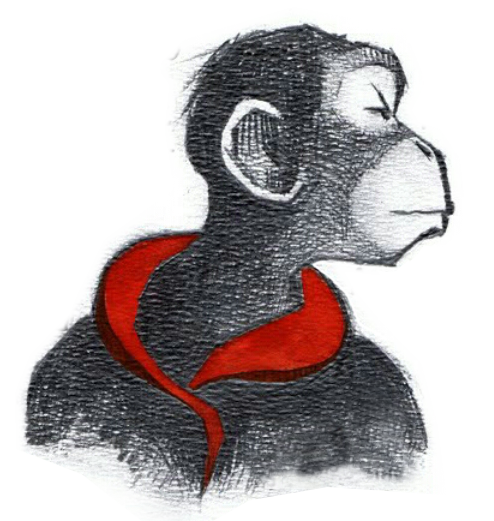
Freedom of thought and charlie kirk
Charlie Kirk: freedom of thought and Christian values
Junio Caselli14 October 2026Year I • issue 5 September–October5 minutes read
This is an article in defence of free thought and Christian values.
I greatly admired Charlie Kirk. Today would have been his thirty-third birthday.
I liked Charlie Kirk when he was alive, very much enjoyed following him and naturally warmed to him.
 Management and strategy
Retrospective Strategy
Francesco Ricci13 October 2026Year I • issue 5 September–October4 minutes read
Complex systems theory uses the concept of the attractor to describe configurations towards which a system tends to converge. These are neither goals nor intentional forces. An attractor makes some trajectories more likely than others, selectively more efficient.
 Society and geopolitics
Thank You, West!
Federico Rampini12 October 2026Year I • issue 5 September–October2 minutes read
This is the conformism of our times: it demands that we regard the West as the supreme evil, the most wicked civilisation of all, and that we be ashamed of it. Naturally, of all this too, because it is part of Western culture.
 Philosophy and epistemology
Transformative truth: how truth changes thought
Susanne Becker12 October 2026Year I • issue 5 September–October6 minutes read
Truth is not a fact but an event. Truth behaves like the inverse of electrons: the moment it is observed, it determines the state of the observer.
 Archive
Not Everything Is Possible
Junio Caselli10 October 2026Year I • issue 5 September–October4 minutes read
There is an argument that often crops up when we talk about the future of technology. Unfortunately, it is wrong
 Family and ethics
The Family and the Capacity to Serve
Junio Caselli9 October 2026Year I • issue 5 September–October2 minutes read
I do not remember the exact words, but the idea was this: a soldier’s family is an integral part of his capacity to serve.
 Political Philosophy and multiculturalism
What kind of human being does multiculturalism presuppose?
Dino Molteni9 October 2026Year I • issue 5 September–October2 minutes read
Multiculturalism: what are the conditions for coexistence?
 Society and generations
Grown-up Talk
Silvia Lonardo8 October 2026Year I • issue 5 September–October2 minutes read
“The adults are talking here, off you go and play”
“It’s none of your business, you can’t have your say”
This is “grown-up talk”, how often have you heard it?
You’re no welcome guest in their discussions.
 Corporate rituals and kpis
Which cult do you work for?
Junio Caselli8 October 2026Year I • issue 5 September–October6 minutes read
Some companies are genuine corporations; others merely play the part. The former have tens of thousands of employees, offices in many countries, inevitably complex processes and a genuine need to translate what happens into numbers that can be understood from afar.
 Economics and geopolitics
Why Europe Is Adrift
Leonardo Stella6 October 2026Year I • issue 5 September–October1 minute read
There is a figure that, to my mind, captures Europe’s problem perfectly, and no, it is not about immigration, but rather something much more deep-rooted that is causing us to destroy ourselves.
 Disability and society
A Tantrum Long Past Its Time
Junio Caselli5 October 2026Year I • issue 5 September–October7 minutes read
In the cartoon Heidi, most of us remember the character: Clara Sesemann is the girl in the wheelchair. She is frail and pale, and lives in Frankfurt in an enormous house, with a terrifying governess and a father who is often away.
 Organization and measurement
Goodhart's Law: when measure replaces value
Matteo Miotto1 October 2026Year I • issue 5 September–October2 minutes read
What is a company really measuring when it says it is measuring value?
On 26 August 2026, Meta reached a $17 billion settlement. Among other things, the agreement provides for a daily two-hour limit on Facebook and Instagram for users aged 13 to 17 (adjustable only by parents), a default night-time block, a ban on displaying like counts to under-18s, and the option for minors to enable a feed without algorithmic recommendations.
 Culture and social sciences
The Genealogy of Culture
Massimo Salvati29 September 2026Year I • issue 5 September–October11 minutes read
What is culture? It seems a trivial question, but it is anything but. Culture is commonly defined as ‘the body of knowledge, values, beliefs and behaviours that an individual acquires through study or that a social group shares and passes down over time’. A definition so thoroughly normalised that it seems neutral and complete; a pity it is neither.
 Management and ai
From Homo sapiens to Homo distractus: AI’s real bottleneck is attention
Fabio Davide Capasso24 September 2026Year I • issue 5 September–October4 minutes read
We created AI to save time, and in many organisations that saved time is turning into a stream of content that no one can keep up with in full.
 Thought and collaboration
Thinking together with intelligent people
Junio Caselli23 September 2026Year I • issue 5 September–October2 minutes read
The internet has accustomed us to thinking that having influence means having an audience. The more people follow you, the more authoritative you seem. This is the audience model: one person at the centre and many people around them listening.
But for those who produce knowledge, it may not be the right model.
 Psychology; Society
Not having children is a choice: but do we really know what drives it?
Edoardo Morelli22 September 2026Year I • issue 5 September–October6 minutes read
The prevailing narrative goes like this: young people are not having children because they have no money.
 Workplace psychology and organisations
Toxic boss: when the word conceals the real problem
Laura Colombo16 September 2026Year I • issue 5 September–October5 minutes read
Every age produces its own keywords. Some finally make visible phenomena that already existed but did not yet have a shared name. In the world of work, few words in recent years have enjoyed the success of the adjective "toxic".
 Religion and politics
Remigrating Unassimilated Priests
Junio Caselli14 September 2026Year I • issue 5 September–October13 minutes read
The Catholic Church has an assimilation problem. Except that it concerns ordained priests, who are within the Church but no longer assimilated.
 Psychology and behaviour
Emotions are not to be managed. They are to be listened to.
Edoardo Morelli8 September 2026Year I • issue 5 September–October6 minutes read
Why suppressing them does not work, ruminating makes things worse, and the only useful thing is to ask them what they are trying to say
 Complexity and organisations
The single cause always has a client
Matteo Nardini4 September 2026Year I • issue 5 September–October10 minutes read
Explanations that hold up in a meeting almost never describe what is happening
 Epistemology and philosophy of science
Error and the Limits of Truth
Susanne Becker1 September 2026Year I • issue 5 September–October4 minutes read
Every model of reality contains a greater or lesser portion of reality. Error is the point at which reality exceeds the model.
This is why a culture that seeks to eliminate error risks also losing the principal mechanism through which it discovers the limits of its own representations.
 Management and organisation
Working in Emergency Mode
Francesco Ricci28 August 2026Year I • issue 4 July–August4 minutes read
When emergencies become a competitive advantage
The most effective organisations do not eliminate the unexpected. They learn to turn it into knowledge.
 Linguistics and journalism
The fragile ecosystem of words
Beatrice Lari26 August 2026Year I • issue 4 July–August2 minutes read
When too many texts published online, in newspapers or on social media are written, sometimes even thought up, by AI, something happens to the language we all share. The innocent and largely unacknowledged victim is the richness of the language through which we understand, describe and discuss reality.
 Medicine and epistemology
Seen but Not Proven
Andrea Poggetti26 August 2026Year I • issue 4 July–August7 minutes read
The epistemic responsibility of medical communication on social media.
What can an American philosopher in love with Hollywood comedy teach us about the surgeon who posts photographs of their work on Instagram?
 Complex Systems and cognitive psychology
True help means not helping
Laura Colombo21 August 2026Year I • issue 4 July–August3 minutes read
Every act of help distributes incentives that determine how social systems evolve.
 Society and anthropology
Islamophobia: the fear is of difference
Dino Molteni18 August 2026Year I • issue 4 July–August5 minutes read
Some words begin as descriptions of a phenomenon and end up preventing us from understanding it in all its complexity.
 Neuroscience and humour
Why your brain hates boredom (and science is on my side)
Diego Parassole13 August 2026Year I • issue 4 July–August5 minutes read
Various studies show how humour activates attention, memory and engagement, turning a presentation into an experience the brain genuinely remembers.
 Economics and sociology of organisations
The spread of an organisational model does not confirm its validity
Matteo Miotto11 August 2026Year I • issue 4 July–August4 minutes read
The human mind, as we now know, is lazy and works through heuristics. Faced with a choice whose outcome is uncertain, we are inclined to take shortcuts
 Management and philosophy
Philosophy Serves to Create Concepts
Il Redattore7 August 2026Year I • issue 4 July–August5 minutes read
Companies should hire philosophers, because philosophers create concepts. Companies are complex structures fuelled by meaning. They need to be understood by those who work in them and by the market, but they also need to understand the market, their competitors, the changes taking place around them and even their own identity.
 Psychology and learning
The effort that makes us whole
Edoardo Morelli5 August 2026Year I • issue 4 July–August7 minutes read
What we lose when we stop putting effort into what we produce.
 Management and ai
Using generative AI to develop strategy
Junio Caselli4 August 2026Year I • issue 4 July–August9 minutes read
Business leaders are accustomed to engaging with people – on the board, among consultants or with colleagues – in meetings where meaning and value emerge from the interplay of different experiences and perspectives. Today, however, leaders are discovering a new interlocutor: generative artificial intelligence. Not as a collaborator to whom they can delegate the drafting of texts or reports, but as a cognitive partner, capable of opening up spaces for strategic reflection and helping to create new meaning for the organisation.
 Management and organisational psychology
Collaborative micro-obstructions
Francesco Ricci3 August 2026Year I • issue 4 July–August4 minutes read
Why some organisational conflicts are produced by structures rather than people.
Most failures of collaboration do not arise from major conflicts.
 Education and epistemology
Notes towards a Definition of the Concept of Education
Dino Molteni1 August 2026Year I • issue 4 July–August1 minute read
To begin, education must be defined as a category in the strong sense. Without a strong definition, education is reduced to morality, custom, policy or social adaptation.
 Medicine and epistemology
Questioning satisfactory explanations
Andrea Poggetti31 July 2026Year I • issue 4 July–August3 minutes read
The most insidious errors arise from explanations convincing enough to bring the search for alternatives to a halt.
 Complexity and change
Tipping points, points of no return
Enrico Cerni29 July 2026Year I • issue 4 July–August3 minutes read
You get that far and it seems as though the landscape you are looking at could stay that way for ever, pleasantly placid, with a few bends, a few rises and falls and the odd unexpected hairpin turn, because the panoramas granted to human beings are never arranged according to criteria of perfection and stasis. For a long time you imagine that your future will have the same colours as the past, the same shades, the same flourishes.
 Epistemology and climate change
Our house is burning. And other linear predictions.
Dino Molteni27 July 2026Year I • issue 4 July–August2 minutes read
‘Have you seen how much Giovannino has grown? If he carries on like this, by the time he’s twenty he’ll be at least three metres tall.’
 Epistemology and ai
AI and Incarnation
Il Redattore25 July 2026Year I • issue 4 July–August4 minutes read
The significance of an action increases when the subject has a stake in its outcome. The incarnation is one of the most extraordinary and least understood facts of the Christian tradition. For almost two thousand years, Christians have affirmed that God enters history as a man who is born, grows up, and knows hunger, thirst, fatigue, physical pain, anguish and death.
 Epistemology and philosophy of science
The Dominant Paradigm
Junio Caselli23 July 2026Year I • issue 4 July–August5 minutes read
With the birth of formal mathematics, particularly in ancient Greece, and then with its modern systematisation, humanity begins to conceive of complex abstract thought. The world is reduced to numbers, proportions and ideal forms. Thought takes on a deductive, sequential structure.
 Education and artificial intelligence
Learning Beyond the Answer
Alessandro Aiello22 July 2026Year I • issue 4 July–August2 minutes read
Learning means progressively changing how we observe, understand and interpret reality, rebuilding the learner from within rather than merely adding information.
 Epistemology and philosophy of language
The Boundaries of Knowledge
Junio Caselli20 July 2026Year I • issue 4 July–August4 minutes read
From the twentieth century onwards, with the crises in the foundations of mathematics, scientific revolutions and the emergence of the cognitive sciences, a decisive epistemological rift opens at the heart of thought: knowledge is no longer understood as a closed, self-sufficient and deductively complete system. Rather, it appears as an open, unstable, processual and constitutively interpretative field.
 AI and law
When responsibility begins before action
Junio Caselli20 July 2026Year I • issue 4 July–August2 minutes read
If an AI makes a wrong decision, does responsibility concern only the final decision, or also the fact that this decision was among the possibilities the system had been designed to consider?
 Epistemology and cognitive psychology
What Is Worth Knowing?
Beatrice Lari17 July 2026Year I • issue 4 July–August2 minutes read
No cognitive system, human or artificial, processes the world: it selects a small part of the world and makes it tractable. True intelligence, then, lies in being able to see what one’s own process of selection has excluded.
 Management and cognitive psychology
Those who build processes should not love them too much
Edoardo Morelli14 July 2026Year I • issue 4 July–August6 minutes read
The organisational paradox: why companies entrust process design to the wrong people
 AI and philosophy
The exception that changes the rules
Junio Caselli14 July 2026Year I • issue 4 July–August8 minutes read
Why AI fails to recognise the strategic exception and how this can put your business at risk
 Understanding and thought
Judgement is a process of continuous revision
Roberto Vacca9 July 2026Year I • issue 4 July–August3 minutes read
To understand, you need to know the facts and their possible consequences. Your experience and the information you have acquired must be sufficient to reveal to you the workings of the world, of nature and society, and other people’s tendencies and motives. You have to think them through.
 Medicine and epistemology
Medicine does not treat desires
Laura Colombo6 July 2026Year I • issue 4 July–August3 minutes read
The doctor does not take the patient’s desire as the basis for a treatment decision.
 Archive
How a civilisation capable of criticising itself comes into being
Dino Molteni30 June 2026Year I • issue 3 May–June8 minutes read
The thesis of this article is not about justice or anyone’s superiority over anyone else, but about the exceptional nature of the West (precisely because it departs from the norm among societies), which has been capable of building institutions devoted to fallibility: science, peer review, the separation of powers, freedom of speech, freedom of the press, adversarial proceedings, philosophical criticism, the university, constitutional revision and so on.
 Politics and psychology
Turnout measures what is at stake
Beatrice Lari27 June 2026Year I • issue 3 May–June3 minutes read
An alternative reading of abstention and the belief that every fall in turnout is a symptom of democratic crisis.
 Cognition and uncertainty
How do we perceive uncertainty?
Susanne Becker23 June 2026Year I • issue 3 May–June2 minutes read
Human beings deal with uncertainty by constructing compressed representations of the paths linking the present to possible futures, rather than modelling the full complexity of the situation.
 Management and organisation
The role no one assigned you
Edoardo Morelli18 June 2026Year I • issue 3 May–June8 minutes read
How real leadership emerges in organisations. At the bottom of every email you send, there is a line saying who you are and what you do: a name, a title, a department. It is the official version of your role, the one the company decided on, the one human resources recorded. Perhaps you agreed it with them; it is certainly the one that appears on the organisation chart.
 Archive
The necessity of objection
Roberto Vacca16 June 2026Year I • issue 3 May–June3 minutes read
Complexity is managed not through individual expertise, but through the methodical comparison of mental models
 Management and ai
The 5 questions to ask yourself before asking AI to decide
Junio Caselli13 June 2026Year I • issue 3 May–June8 minutes read
A manager who asks AI “what is the best option?” before establishing what “best” means has already surrendered the most important part of their role.
 Psychology and communication
When the hand recovers but the patient does not.
Andrea Poggetti10 June 2026Year I • issue 3 May–June6 minutes read
A hand can heal perfectly and leave a patient dissatisfied. The problem often begins with the questions no one has asked.
 Cognitive psychology and personal growth
If there is disorder within, you cannot create order outside
Edoardo Morelli8 June 2026Year I • issue 3 May–June10 minutes read
Our minds discard almost all the information they receive, selecting only what they consider relevant. Values, goals and beliefs act as the criteria for this selection. Understanding how the attentional filter works means understanding why some people see opportunities everywhere while others feel submerged in noise.
 Management and smart working
Smart working, objectives and complexity
Francesco Ricci8 June 2026Year I • issue 3 May–June3 minutes read
If only all jobs were alike!
Complex issues rarely admit simple solutions, and smart working belongs in this category. Public debate has gradually reduced the subject to a deadlocked confrontation: on one side, the idea that people are being brought back to the workplace to keep them under control; on the other, the belief that employees want to stay at home simply to avoid working. Both positions offensively trivialise the legitimate arguments on either side.
 Management and innovation
Semantic exaptation
Francesco Ricci6 June 2026Year I • issue 3 May–June5 minutes read
when research means discovering value in what the organisation already has
Innovation through exaptation arises when, through a new linguistic classification, meaning opens up an economic space that was previously invisible.
 Cognitive psychology and literature
Gregor’s Room
Junio Caselli5 June 2026Year I • issue 3 May–June4 minutes read
Gregor’s Room
An allegory of the capacity of environments to generate and classify the beings they contain.
When Kafka’s Metamorphosis is discussed, all attention centres on Gregor Samsa. His transformation into an insect is analysed (Kafka wrote Verwandlung, not Metamorphose); his relationship with his family, his guilt, alienation and work are examined, leading ultimately to the question of what human condition all the events of the story might be a metaphor for.
 Management and innovation
How to discover the hidden value in your company
Francesco Ricci3 June 2026Year I • issue 3 May–June11 minutes read
Many innovations can emerge from a new way of naming and using what we already have within the company.
Many companies expect innovation to come from outside. New technologies, markets, talent, consultants or miracles. Much as football clubs do when they want to reverse a run of poor results by buying players from other leagues. It is understandable, and sometimes it works.
 Management and complexity
The value of inefficiency
Beatrice Lari28 May 2026Year I • issue 3 May–June3 minutes read
In the language of management, few words enjoy a better reputation than efficiency. For over a century, organisations have sought to reduce waste, eliminate redundancies, simplify procedures and accelerate decision-making. The ideal business is often imagined as a perfectly designed machine, in which every component performs its function with the lowest possible consumption of resources.
 Management and ai
The Super-Competent Colleague
Junio Caselli7 May 2026Year I • issue 3 May–June4 minutes read
How AI is shifting the point at which responsibility stops within organisations
 AI and society
The New Rich: the Cognitive Aristocracy
Junio Caselli28 April 2026Year I • issue 2 March–April4 minutes read
Who will retain the capacity to challenge the system that produces the thinkable?
 Management and sociology
The organisational ‘filter bubble’
Marco Zampollo4 March 2026Year I • issue 2 March–April4 minutes read
Contemporary organisations have information to spare. They are increasingly connected and quicker to respond to familiar stimuli. But when the context shifts sideways, when signals do not come through the usual channels, and when needs are not incremental but discontinuous, some businesses find themselves in a state of structural fragility.
 Management and complex systems
The Karma of Organisations
Francesco Ricci10 February 2026Year I • issue 1 January–February3 minutes read
Organisations grow because some individuals give interpretations as gifts.
The sentence may seem unusual. We are accustomed to thinking that organisations grow thanks to capital, technology, processes or skills. All important elements. Yet none of them is sufficient to explain why some organisations develop an extraordinary ability to understand their environment while others, despite having similar resources, remain trapped in outdated readings of reality. The difference often lies in the production and circulation of meaning.
 Management and strategy
How to understand today what the future holds for your business
Junio Caselli3 February 2026Year I • issue 1 January–February6 minutes read
Businesses fail because they observe the world through metrics, categories and models designed to optimise the core, not to interpret what is changing
 Management and cognitive psychology
Meaning-oriented organisations survive longer
Il Redattore12 January 2026Year I • issue 1 January–February4 minutes read
Why do the world’s largest and most sophisticated organisations hire philosophers, anthropologists, ethicists, cognitive scientists, linguists or historians of ideas?