
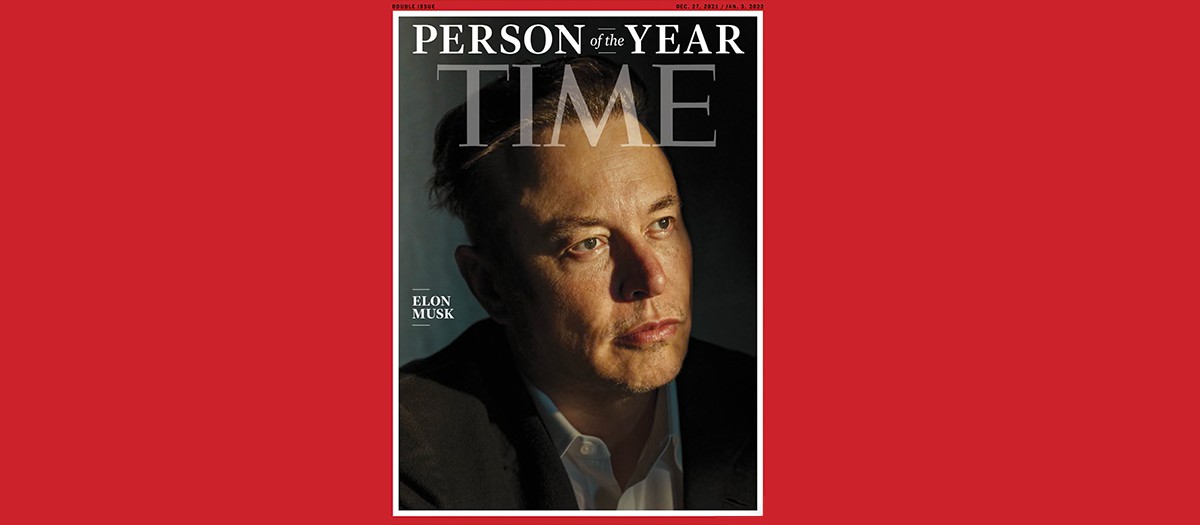

Every so often I amuse myself by wondering what I could possibly say to Elon Musk that would be worth hearing if I ever happened to meet him. It is not easy. Musk can readily consult the finest minds in the world. He has revolutionised space rockets, electric cars, artificial intelligence, satellites, tunnels and brain–computer interfaces, as well as a host of things I cannot even think of. Any clever idea of mine is likely to be one he has already dismissed.
Still, I will try: In the late 1980s, Jay Winsten of the Harvard School of Public Health was working on the problem of alcohol-related accidents. He took the idea of the designated driver from the Scandinavian countries, where groups would decide who would stay sober for the evening and drive everyone else home.
Winsten realised that changing collective behaviour required more than explaining that drink-driving was dangerous and that it would be more effective to make it appear as a new normal that people could emulate.
He and his team approached those who showed Americans what normality looked like every day: screenwriters, producers, television networks and Hollywood studios. ABC, CBS and NBC joined in, along with the Board of the Writers Guild of America West.
Over four years, more than 160 episodes of television series incorporated the concept of the designated driver: Cheers, L.A. Law, The Cosby Show, Dallas and many others.
They did so without interrupting the story, without doing anything special. A character would say: ‘I’m driving tonight’, or: ‘It’s your turn tonight, I drove yesterday’. And would not drink. Simple.
That little line within an ordinary story could carry more weight than a Pubblicità Progresso advert: "if they do it on TV, that must be how it’s done."
The behaviour became visible, something that could be named and imitated. And the young man who did not drink was not the boring one, but one of the characters in the story. Harvard also worked on how to portray him: the designated driver had to be part of the party, not excluded from the fun. Indeed, the campaign’s slogan was: ‘The Designated Driver Is the Life of the Party’.
In the years immediately afterwards, the concept became firmly established in American culture. Between 1988 and 1992, alcohol-related road deaths fell by around 25%. It would perhaps be excessive to attribute this result solely to the campaign: stricter laws, enforcement and other initiatives came into play over the same period. But the project certainly helped spread the new social norm. And the export of American series took the concept beyond the USA.
Of course, a young Italian today does not say ‘I’m driving’ because his father watched Cheers in 1990. But a behaviour that once needed explaining has become an available mental category. It has a name that everyone understands at once, and everyone regards it as socially positive behaviour.
And Musk? I thought to myself that if he intends to populate Mars, perhaps he ought also to consider what kind of people are needed to make the project feasible: what intelligence, what culture, pride or courage it takes.
So, once he had clarified his ideas, I would tell him to start by building a Netflix: a proper platform for films and television series, with great screenwriters, directors, actors, funding, production studios and creative freedom. To make films that anyone would want to watch because they are first-rate: thrillers, love stories, science fiction, comedies and teenage series. Imposing, as producer, just one creative constraint: at some point in the story, without overdoing it, they must make being intelligent desirable; they must show that people who think and understand are more successful than those who do not know how.
Ever since secondary school, it bothered me that the desirable character was good-looking, self-assured, sporty and perhaps rich, while the intelligent, studious one was often socially inept and kept on the sidelines.
I know it was a caricature designed to simplify a straightforward plot, a stock character, as in the comedies of Plautus: its sole purpose was to make the protagonist shine. But through constant repetition, caricatures become real: they create an expectation and influence how we treat real people who resemble the loser in American high-school series.
For Musk’s Netflix, I imagine light touches: the heroine has two young men to choose between, and naturally chooses the one who understands what the other cannot grasp. Or: he has to choose between two equally desirable young women and chooses the one who shows him the world in a new way through what she knows or the depth of her thinking.
This is not a paradox intended to offer a counter-intuitive model: it is a proposal closer to reality than watching these series might lead us to believe. A woman may take up with a man simply because he is desirable, but it is more likely that, given equal physical attractiveness, she will prefer the one with brains, culture and the ability to understand contexts.
There are attractive, interesting scholars, people who read non-fiction and speak knowledgeably without being academics on insecure contracts, attractive women who find a man attractive because he thinks, and desirable men fascinated by a woman because they appreciate her intelligence.
Intelligence should not become the cornerstone of these series, nor should the point be repeated ad nauseam. That is precisely the lesson of the designated driver: a powerful social norm can be shown naturally, without too much insistence, and still have an effect.
And what I have described so far is just one of the gentle nudges that could emerge from a studio whose aim is to offer positive models with a light touch.
Social psychology knows the mechanism well: Albert Bandura’s social learning theory assigns an important role to the observation of models. There has also been a field of study for decades, called entertainment-education, which analyses the incorporation of behaviours and norms into popular narratives. Experimental studies have shown that this kind of fiction can change knowledge, attitudes and even real behaviour.
The objection, if anything, might be: if we can use a television series to make the designated driver normal, if this is the power of the mass medium, can we also use it to make almost anything else normal, even something negative?
Yes. Exactly. In fact, we already do, and we have been studying it for almost seventy years. Every film contains an implicit theory of what deserves prestige, of who is desirable, of what it means to be successful, of how people speak and of which qualities make someone fall in love.
Cinema and television influence society regardless, even when no one has consciously decided to convey a message.
So I would tell Musk that we might as well use this inevitable effect to make us want to become the most capable and well-rounded people we can be.